Everything you need
These amounts serve four with rice. Chinese or Japanese eggplants have thin skins and few seeds, so they soften quickly and need no peeling. Have everything measured and within reach before you start.
| Ingredient | Amount | Notes |
|---|---|---|
| Chinese or Japanese eggplants | 3 medium, about 700 g | Cut into 5 cm batons |
| Fine sea salt | 1 teaspoon | For a short sweat |
| Neutral oil | 1/3 cup | Peanut or vegetable, for the wok |
| Garlic | 6 cloves | Finely minced |
| Fresh ginger | 1 tablespoon | Minced |
| Scallions | 4 | Whites and greens separated, sliced |
| Chili bean paste | 1 and 1/2 tablespoons | Doubanjiang, or less for a milder dish |
| Light soy sauce | 2 tablespoons | The main salt in the sauce |
| Chinkiang black vinegar | 1 and 1/2 tablespoons | Or rice vinegar with a pinch of sugar |
| Caster sugar | 2 teaspoons | Balances the vinegar and chili |
| Cornstarch | 2 teaspoons | Mixed with 3 tablespoons of cold water |
| Toasted sesame oil | 1 teaspoon | Added off the heat |
| Cooked white rice | To serve | Not part of the sauce |
Equipment for the wok
- A wok or a wide, heavy skillet with a lid.
- A small bowl and a whisk for the sauce.
- A spider or slotted spoon for lifting the eggplant out of the oil.
- Paper towels and a plate for draining.
Stir frying, step by step
Have every ingredient measured and within reach before the wok gets hot. The cooking itself takes less than 10 minutes and the sauce goes in at the very end. From start to table allow about 45 minutes, most of it soaking and chopping.
-
1. Cut and sweat the eggplant
Halve the eggplants lengthwise and cut into 5 cm batons. Toss with the salt and leave for 15 minutes, then pat completely dry with paper towels. Dry eggplant browns instead of steaming and drinks far less oil.
-
2. Mix the garlic sauce
Whisk the soy sauce, black vinegar, sugar, cornstarch slurry and 3 tablespoons of water in a small bowl. Set it by the stove with the minced garlic, ginger, chili bean paste and scallion whites. Stir it again just before using, since the starch settles.
-
3. Sear the eggplant
Heat the neutral oil in a wok over medium high heat until it shimmers. Add the eggplant in two batches and cook for 4 to 5 minutes, turning, until the skins are deeply wrinkled and the flesh is soft and golden. Lift out and drain on paper towels.
-
4. Bloom the aromatics
Pour off all but 1 tablespoon of the oil. Add the chili bean paste and fry for 30 seconds until the oil turns red, then add the garlic, ginger and scallion whites and stir for another 30 seconds. Keep everything moving so the garlic does not scorch.
-
5. Glaze and finish
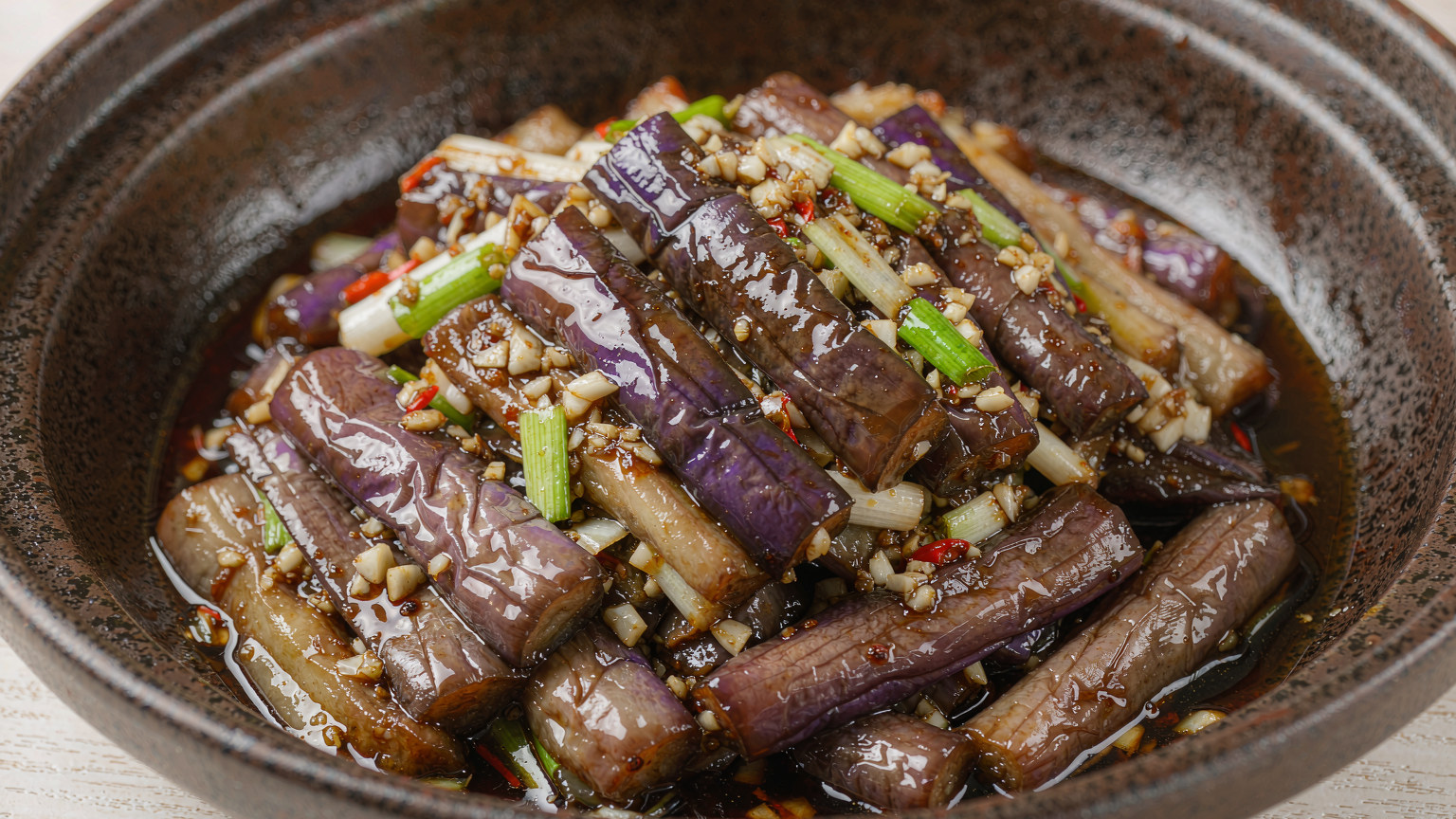
Return the eggplant to the wok. Stir the sauce once more, pour it around the sides of the wok and toss for 60 to 90 seconds until every piece is coated and the sauce is thick and glossy. Take it off the heat, add the sesame oil and scallion greens, and toss once more.
-
6. Serve straight away
Spoon over hot white rice, scraping every bit of sauce from the wok. This dish is at its best immediately, while the edges of the eggplant still have a little texture.
Watch the wok work
The two moments worth watching are how the eggplant should look when it leaves the oil, and how quickly the sauce thickens once it hits a hot wok. Both happen faster than written recipes suggest.
Video embedded from YouTube. The full ingredient amounts and written method are above.
What one serving gives you
| Nutrient | Per serving |
|---|---|
| Calories | 265 kcal |
| Protein | 4 g |
| Carbohydrate | 24 g |
| Fat | 18 g |
| Fiber | 7 g |
| Sodium | 780 mg |
Estimates only. How much oil the eggplant absorbs and how much rice you serve along with it will change these figures the most.
Garlic, heat and silk
This is not a shy dish. Garlic arrives first, soft and sweet from a quick fry rather than raw and sharp, followed by the warm, fermented heat of chili bean paste. Black vinegar gives a mellow tang, sugar rounds it off, and the eggplant itself is mild, silky and slightly sweet, carrying the sauce rather than competing with it.
- Savory and deeply garlicky from six cloves bloomed in hot oil rather than stirred in raw.
- Gently hot from doubanjiang, with a warmth that builds rather than burns.
- Sweet, sour and salty in that order, held together by a thin cornstarch glaze.
- Silky inside, lightly chewy at the skin. Properly seared eggplant collapses without turning to mush.
- Fresh at the end from scallion greens and a few drops of toasted sesame oil.
Tips for the wok
- Use Chinese or Japanese eggplants if you can. Their thin skins and fewer seeds stay tender; globe eggplants need peeling and a longer salting.
- Dry the batons thoroughly. Water on the surface is what makes the oil spit and the eggplant steam.
- Do not crowd the wok. Cook in two batches and let the pieces sit for a few seconds between tosses so they brown.
- Mix the sauce again right before pouring. Cornstarch settles fast and a thick lump will seize in one corner of the wok.
- For a milder plate, use half the chili bean paste and add a teaspoon of tomato paste for color.
Always cook eggplant until the flesh is completely soft with no firm or raw center. See the food safety guidance in our Terms of Use.
Garlic sauce questions
What gives Chinese eggplant with garlic sauce its flavor?
A short sauce of light soy sauce, Chinkiang black vinegar, sugar, cornstarch and a generous amount of minced garlic, built on a spoon of chili bean paste. It is savory first, then lightly sweet and sour, and it clings to the eggplant rather than pooling.
Why does eggplant in garlic sauce soak up so much oil?
Raw eggplant is full of air and water. Salting it for 15 minutes and drying it collapses some of that structure, and searing over medium high heat in a single layer sets the surface quickly. Both steps cut the oil the dish will drink.
Can I make eggplant in garlic sauce without a wok?
Yes. Use a wide, heavy skillet and cook the eggplant in two batches over medium high heat. The wok makes tossing easier, but high heat and enough room in the pan matter more than the shape of the pan.
Is this eggplant in garlic sauce recipe very spicy?
Mildly. One and a half tablespoons of doubanjiang gives warmth rather than real heat. Halve it for a gentle dish, or add a chopped fresh chili with the garlic if you want more.