The short ingredient list
These amounts make four halves. White shiro miso is the one ingredient worth seeking out: it is sweeter and milder than red miso, and it is what lets the glaze caramelize without turning harsh.
| Ingredient | Amount | Notes |
|---|---|---|
| Japanese eggplants | 4 medium, about 600 g | Halved lengthwise, stems left on |
| Neutral oil | 2 tablespoons | For brushing before roasting |
| White miso paste | 3 tablespoons | Shiro miso, sweet and mild |
| Mirin | 2 tablespoons | Or 1 tablespoon of honey with 1 of water |
| Sake | 1 tablespoon | Or dry white wine or water |
| Caster sugar | 1 tablespoon | Helps the glaze caramelize |
| Soy sauce | 1 teaspoon | Just enough for depth |
| Toasted sesame oil | 1 teaspoon | Optional, for the glaze |
| Toasted sesame seeds | 1 tablespoon | To finish |
| Scallions | 2 | Thinly sliced, to finish |
Tools you will need
- A sharp knife for scoring the cut faces.
- A baking sheet lined with parchment or foil.
- A small saucepan and a whisk for the glaze.
- A pastry brush and a broiler safe tray.
Roast, glaze and broil
There are only two stages: get the eggplant completely soft, then color the glaze. Most of the 35 minutes is hands off oven time, so mix the glaze while the eggplant roasts and nothing sits waiting.
-
1. Score and oil the eggplant
Heat the oven to 220 C, or 425 F. Halve the eggplants lengthwise, leaving the stems on for presentation. Score the cut faces in a shallow diamond pattern about 5 mm deep, brush with the neutral oil and place cut side down on a lined baking sheet.
-
2. Roast until collapsing
Roast for 18 to 22 minutes, until a knife slides through the thickest part with no resistance and the skins have wrinkled. Underdone eggplant is firm and faintly bitter, so give it the full time.
-
3. Mix the miso glaze
While it roasts, whisk the miso, mirin, sake, sugar, soy sauce and sesame oil in a small saucepan over low heat for 2 to 3 minutes until smooth and just thickened. Do not let it boil, or the miso will turn grainy and lose its aroma.
-
4. Brush and broil
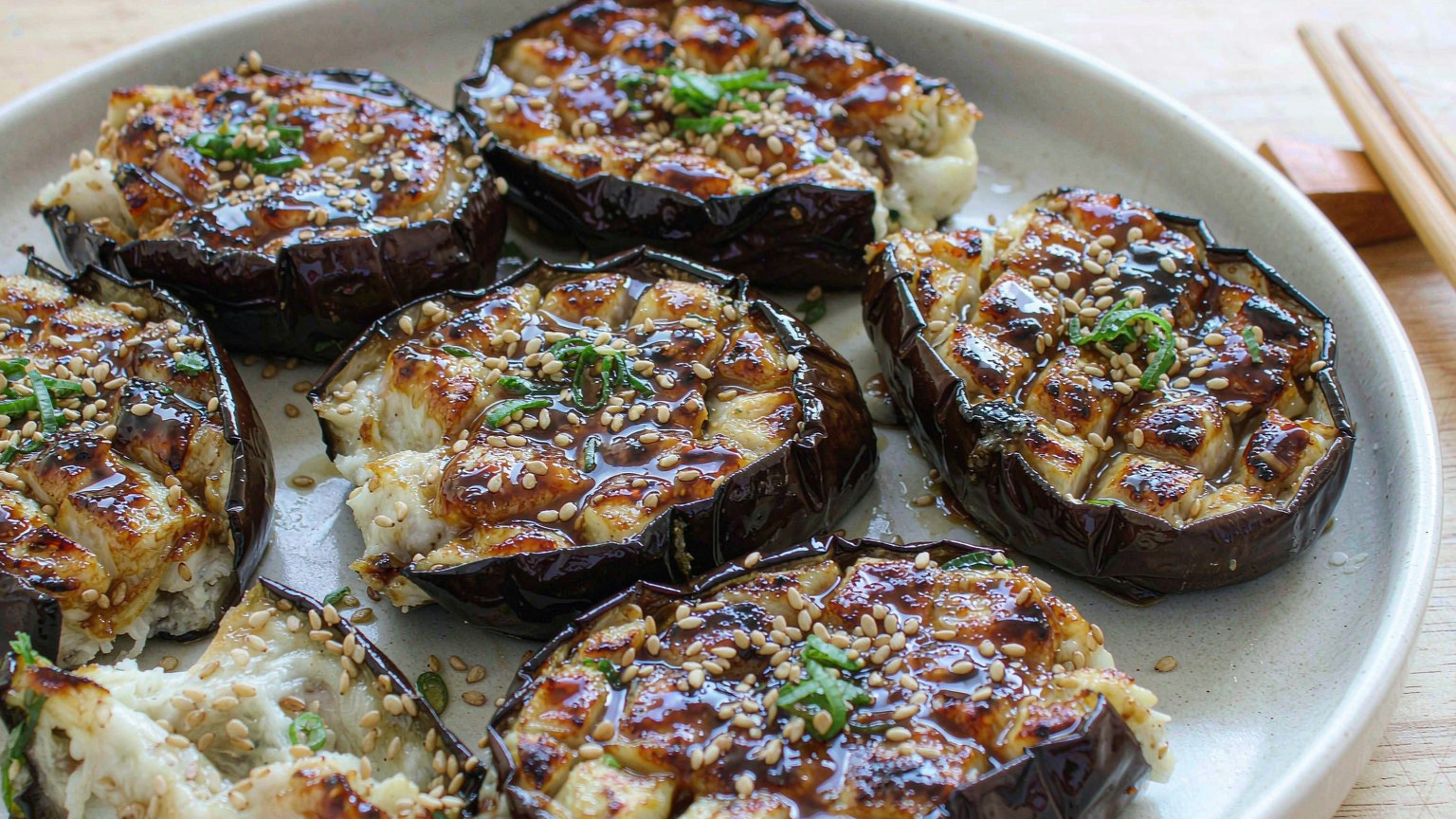
Turn the eggplants cut side up, spread a generous spoon of glaze over each half, and broil on the middle shelf for 3 to 5 minutes. Watch it closely: you want dark caramel spots and a few bubbles, not a blackened surface.
-
5. Finish and serve
Scatter with the sesame seeds and sliced scallions. Serve warm rather than piping hot, with plain rice and something green on the side.
A lighter plate
| Nutrient | Per serving |
|---|---|
| Calories | 165 kcal |
| Protein | 4 g |
| Carbohydrate | 20 g |
| Fat | 8 g |
| Fiber | 6 g |
| Sodium | 620 mg |
Estimates only. The brand of miso and how generously you brush the glaze will change the sodium most.
Sweet, salty, caramelized
Eggplant on its own is quiet, faintly sweet and almost creamy when fully roasted. White miso brings salt, a gentle fermented depth and a little sweetness, and the broiler turns the sugar in the glaze into something close to caramel. The result is rich and savory with a faint bitterness at the edges, balanced by the fresh bite of scallion.
- Sweet and salty from shiro miso, mirin and a spoon of sugar reduced into a glaze.
- Deeply savory from fermentation, which is why such a short ingredient list still tastes full.
- Custardy and silky inside, with slightly chewy, caramelized edges from the broiler.
- Nutty and fresh from toasted sesame seeds and raw scallion added at the end.
- Not sharp. If the glaze tastes harsh, it boiled or the miso was too dark; white miso keeps it round.
Before you turn on the oven
- Use white or yellow miso. Red miso is much saltier and will overpower a mild vegetable.
- Score shallowly. Cutting too deep makes the halves fall apart when you spread the glaze.
- Broil on the middle shelf and stay with it. Miso goes from caramelized to burnt in under a minute.
- Roast cut side down first. That steams the flesh gently and keeps it from drying out before the glaze goes on.
- For a fuller meal, serve two halves per person over rice with a soft egg or a bowl of miso soup.
Always cook eggplant until the flesh is completely soft with no firm or raw center. See the food safety guidance in our Terms of Use.
Miso glaze questions
What is a miso eggplant recipe called in Japan?
Nasu dengaku. Nasu means eggplant and dengaku refers to food spread or skewered with miso and grilled. The oven version here keeps the same glaze and the same caramelized finish without the skewers.
Which miso works best for miso glazed eggplant?
White shiro miso, or a mild yellow miso. It is sweeter and less salty than red miso, so the glaze caramelizes without turning harsh. If red miso is all you have, use half the amount and add a little more mirin.
Can I make miso glazed eggplant ahead of time?
Roast the halves and mix the glaze up to a day ahead and keep them separately in the fridge. Brush and broil just before serving, since the glaze loses its gloss as it sits.
Why is my miso eggplant bitter?
Usually the eggplant was not roasted long enough, or the glaze caught under the broiler. Roast until a knife meets no resistance, then broil only until small dark spots appear.